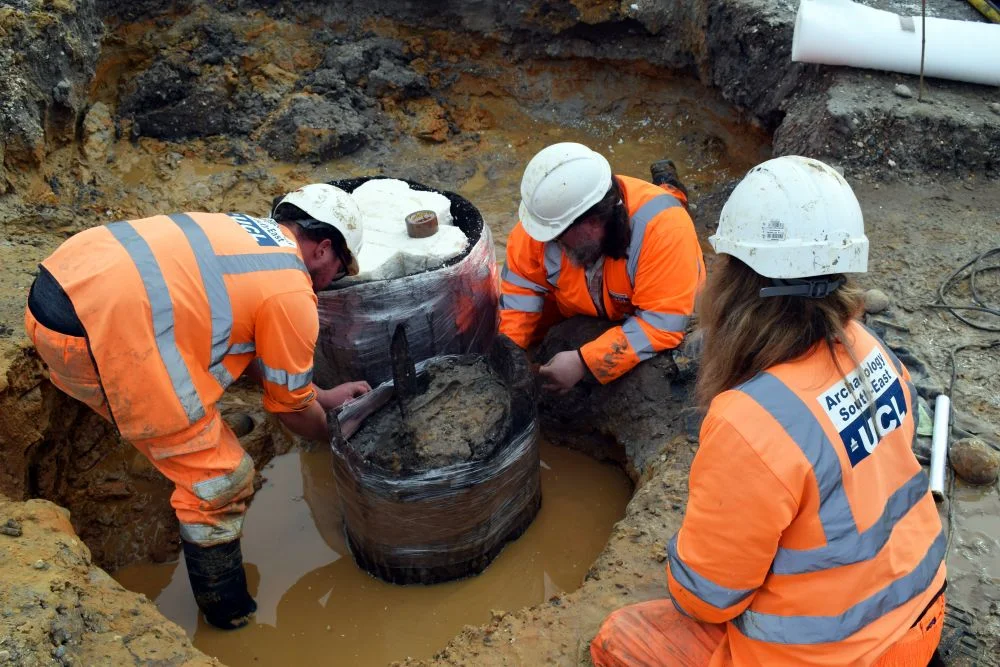

Five wooden wells, the oldest dated to 719 to 396 BC, were dug up north of Southampton on Southern Water's new pipe route. Four are hollowed-out oak trunks.
Five wooden water wells, the oldest built in the Early Iron Age, have been dug out of wet ground just north of Southampton. Radiocarbon dating puts one of them between 719 and 396 BC, according to Southern Water, which paid for the excavation.
The dig was carried out by Archaeology South-East (ASE), part of the UCL Institute of Archaeology, ahead of work on the Southampton Link Main, a new 19km water main between Otterbourne and Southampton. The wells all tapped the same spring, which people used for water in both the Iron Age and the Roman period. Southern Water has not given the exact location of the site.
Oak trunks that did not rot
Four of the wells are “hollow log-lined wells”: oak trunks hollowed out and slotted into pits. The largest is 70 centimetres across. One was held in place by a ring of stakes, and another had been patched up while it was still in use, with a wooden shovel blade wedged in to support a broken section.
Rachael Geoghegan of UCL Archaeology South-East, who led the excavation, said the wet soil was what kept the timber intact:
“It is rare and exciting to find wooden structures from this time period. The oxygen-starved conditions caused by the wet soil around the spring prevented the wood’s decomposition, preserving the ancient timbers in exquisite detail. We can even see axe marks on some of the timbers.”
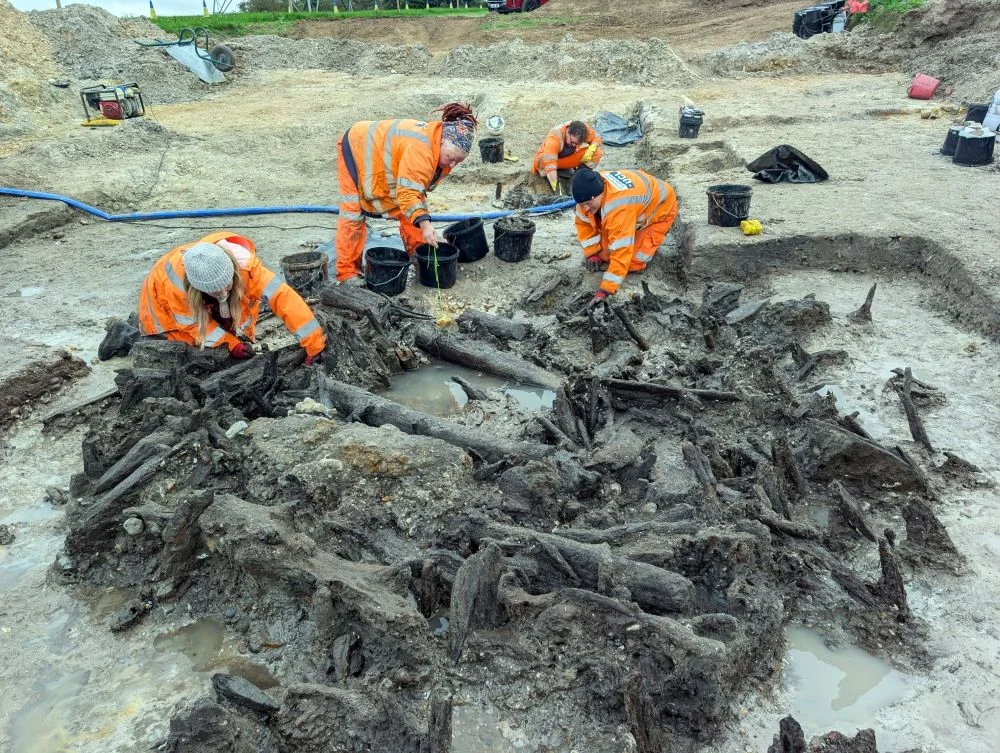
A Roman well built a different way
Pottery found in and around the Iron Age wells shows people were still drawing water from the spring in the later Roman period. The fifth well dates from Roman times and was made differently: its builders dug a shallow rectangular pit and lined it with timber planks and stakes rather than a hollow log. Early identification suggests it is mostly oak as well, using both large timbers and roundwood stakes, so the wood came from saplings and older trees.
Hannah Street, a waterlogged wood specialist at UCL Archaeology South-East, said:
“It’s a great opportunity to work on a site with such exceptionally well-preserved wood. Working closely with our conservator we carefully lifted the Iron Age hollowed logs in as complete a condition as possible. The Roman well in particular required meticulous excavation and recording to untangle the different phases of its timber construction. Together these wells provide a fascinating window into how technology developed from the Iron Age through to the Roman period, revealing changing approaches to construction and water management.”
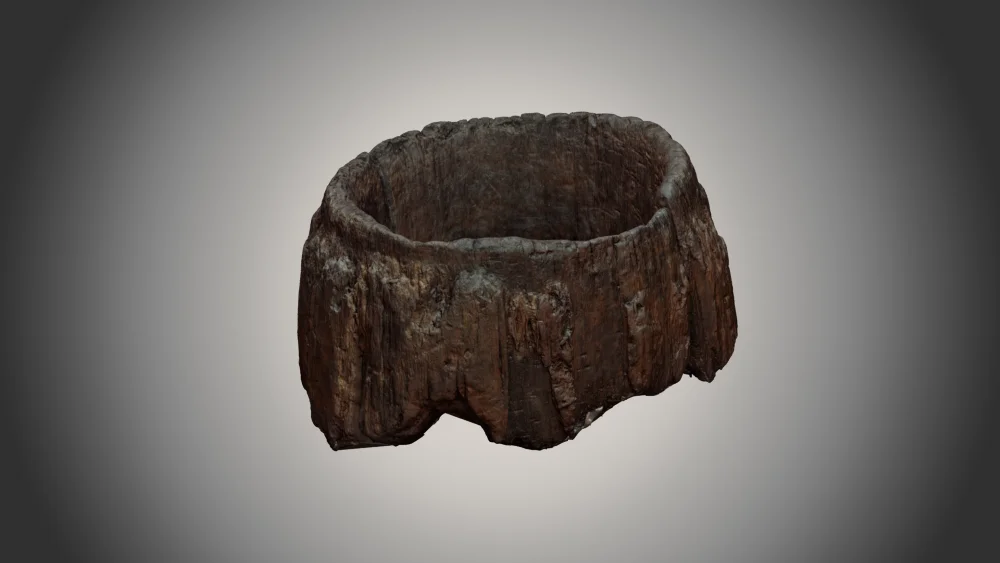
More results to come
ASE is still analysing the finds and the soil samples taken from the wells. Pollen and plant remains preserved in them could show what people were doing around the spring, what the landscape looked like, and when the wells fell out of use. The team also hopes to date the Roman well more precisely by dendrochronology, matching the growth-ring patterns in its older timbers to work out when the trees were felled.
Why the pipe is being laid
Southern Water says it is investing more than £100 million in the Southampton Link Main, and that the pipe will help tackle a drought-period shortfall of around 200 million litres a day that Hampshire faces. The company names the River Test and the Itchen among the chalk streams in its area.
Phil Maunder, project manager at Southern Water, said:
“This is a terrific find and one that contrasts a two-thousand-year-old water source with a modern water project. There are many exciting aspects to major projects, and this is a great example.
“We’re investing more than £100million in the Southampton Link Main (SLM) project and once operational, the project will play a vital role in keeping Hampshire’s taps and rivers flowing for future generations.”
What it means for you
- Nothing to see in person yet. The timbers have been lifted for study and Southern Water has not announced a display or open day.
- Hampshire’s summer water supply. The pipe is part of Southern Water’s plan for the county’s drought-period shortfall; the announcement gives no date for it to start working.
- Dates to follow. A firmer date for the Roman well and the soil-sample findings will come once ASE’s analysis is finished.
Source: Southern Water, “Ancient water source found during modern water pipeline excavations”, 6 November 2026.
Have your say