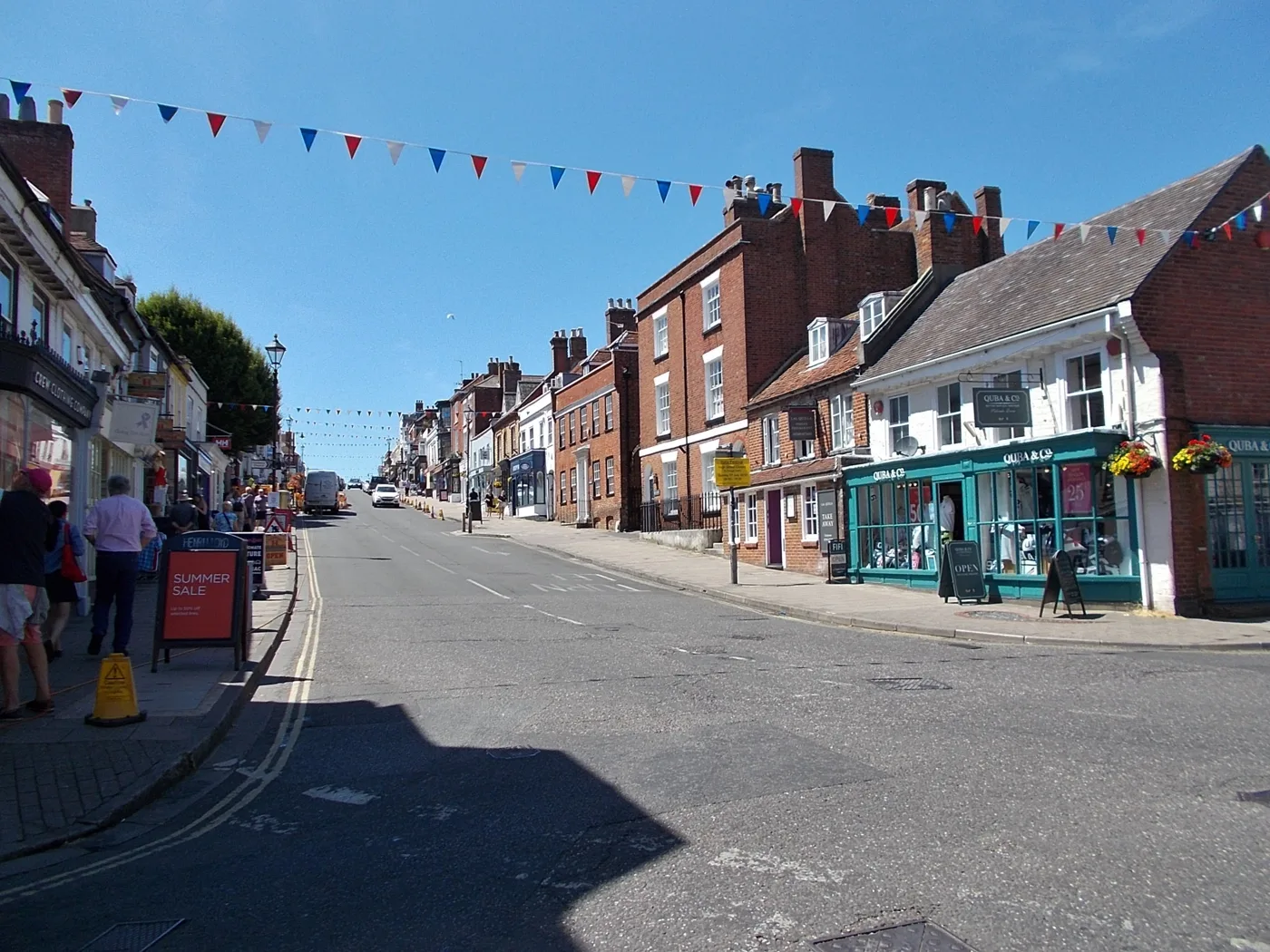

Parking clock holders will get a free first hour on Lymington High Street in a 12-month trial. Hampshire approved it on 2 November, with no start date yet.
Drivers with a New Forest parking clock will be able to park free for an hour on Lymington High Street. Hampshire County Council approved a 12-month trial on Monday 2 November.
Everyone else keeps the current deal: 20 minutes free, then £1.50 an hour. The county turned down a free first hour for all drivers, the change High Street traders had asked for.
Councillor Steve Forster, the county’s Executive Member for Highways and Passenger Transport, took the decision. His decision record was published the same day.
What was decided
The decision record says the county will:
- keep the pay and display scheme introduced in August 2022, with its 20 free minutes
- draw up an Experimental Traffic Regulation Order to trial a free first hour on the High Street for people using a New Forest District Council parking clock
- run the trial for 12 months, with an interim review after six months and a full review at the end
The officers’ report had proposed a trial of at least six months. Councillor Forster set it at 12, “as discussed by the Universal Services Select Committee”.
That committee of county councillors met on the morning of 2 November. Its chairman, Councillor Gwen Robinson, wrote to Councillor Forster the same day recommending the trial.
Why not a free hour for everyone
Councillor Forster said in his statement that he recognised “the merits of the alternative proposal for one hour of free parking for everyone”. But he said: “this option is currently unfunded and in light of the comments that have been made on the Medium-Term Financial Strategy (MTFS), I take the view that it would be irresponsible to make any decision that is unfunded or unbudgeted.”
He said the parking clock scheme “can be introduced now”. The 12-month trial will also look at what a free hour for everyone would cost and how it could be paid for, “so that this can form part of the evidence for any future decision”.
The decision record gives the county’s reasons for keeping the current scheme:
- it has improved turnover and made more spaces available on the High Street
- there is “no evidence” that cutting the free period from an hour to 20 minutes has hurt the High Street’s “vitality or viability”
- a longer free period or a residents’ clock would need a new traffic order, taking at least 12 months
- cutting the tariff would leave a budget gap of about £50,000 a year
It accepts that “local businesses have concerns that the fees and short free-parking limits are impacting footfall and trade”. Councillor Forster thanked the businesses that made deputations.
A temporary order, which would have been quicker, was ruled out. The record says those powers are limited to roadworks and road safety.
The options officers costed, including the £105,000 to £120,000 a year a free hour for everyone would cost, are in our report from 26 October.
When it could start
Updated 29 November: the county council’s decision page now lists the decision as “Recommendations Approved”, no longer marked subject to call-in, with an effective date of 11 November. Minutes of the 20 November call-in meeting are still not published, so the committee’s vote is not on the record yet.
Updated 25 November: five councillors called the decision in, and a scrutiny committee heard the call-in on 20 November. Its outcome is not yet in the published minutes.
Not yet. Five members of the Universal Services Select Committee asked for the decision to be called in after it was announced on 3 November. The committee met to consider it on Friday 20 November, according to the monitoring officer’s report for that meeting.
The report gives the reasons the councillors stated:
- Councillor Forster had not followed the committee’s recommendation
- evidence had been provided that the 20-minute free period has hurt the “vitality or viability” of Lymington High Street, contrary to the decision record
The committee could only ask Councillor Forster to think again, or decide not to. It could not overturn the decision itself, the report says. Because the decision sits within the budget, a call-in does not stop it being put into effect.
The committee had backed a different set of recommendations on 2 November, by 11 votes to 6. Those were proposed by Councillor Davies and seconded by Councillor Kyrle.
The county has not yet published the minutes of the 20 November meeting. We will report the result when it does.
After that, county officers have to write the experimental order and publish it. The decision gives them authority to handle the notices, consultation and enforcement arrangements. It sets no start date.
What it means for you
- Nothing changes yet. On weekdays it is still 20 minutes free, then £1.50 an hour, from 9am to 6pm. Saturdays are market day, with no parking on the High Street.
- You will need a district parking clock to get the free hour. The annual short stay clock costs £47 for 2026, rising to £49 from 1 January 2027. Where to buy one is on our parking page.
- You will still need a ticket. Under the scheme set out in the officers’ report, you take the free 20-minute ticket from the machine or the app, then set your clock to the time on it.
- You can comment during the trial. An experimental order works as its own consultation. Objections count if they are made in its first six months.
We will add the start date when the county publishes the order.
Have your say