
NFDC forecasts a £1.25m shortfall for 2027/28 and asks residents from 13 October about six savings, from business bins to public toilets. Parking goes up on 1 January.
Updated 25 November: the consultation drew 644 responses. The council now proposes to end business waste collections on 1 July 2027 and to cut the climate budget by £100,000; the 2027/28 gap is down to £716,000. Cabinet decides on 2 December. Our report on the results.
Updated 11 November: Full Council approved the plan on 12 October, the published minutes show, including the car park charges and Keyhaven river fees from 1 January 2027. Councillors argued against the parking rise and the plan to stop the business waste service; the finance portfolio holder said the parking increase was in line with inflation only. The consultation closed on 10 November and no results have been published yet.
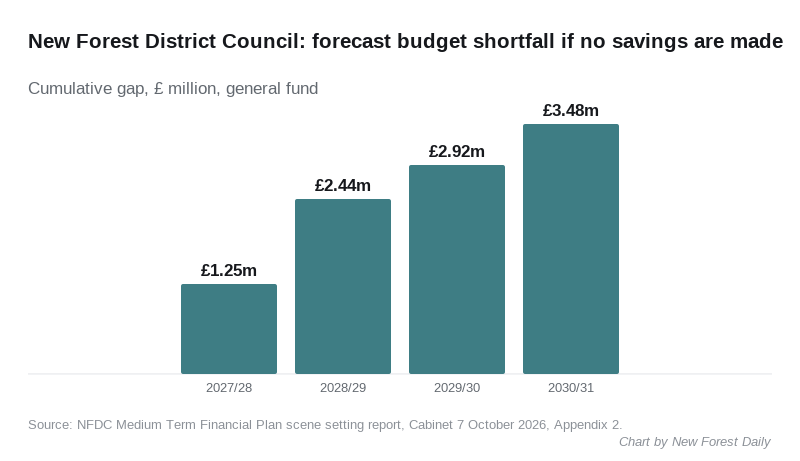
New Forest District Council expects to be £1.25 million short next year. The gap grows to £3.48 million by 2030/31 if nothing changes. From Tuesday 13 October it asks residents which of six savings they could live with.
The figures are in the council’s medium term financial plan, which Cabinet agreed on 7 October. Full Council votes on it on Monday 12 October at 6.30pm. (Medium Term Financial Plan, scene setting, General Fund, Cabinet 7 October 2026)
The same papers raise car park charges, parking clocks and Keyhaven river fees from 1 January 2027. Council tax is assumed to rise by the maximum allowed.
The gap in numbers
The council’s general fund budget for this year is £26.63 million. The forecast shortfall for 2027/28 is £1.25 million, about 5% of that. The report calls the figure an improvement: in February the council expected a £1.5 million gap.
The shortfall keeps growing after that:
- 2027/28: £1.250 million
- 2028/29: £2.443 million, about 9% of the budget
- 2029/30: £2.918 million
- 2030/31: £3.484 million
Costs are expected to rise by £5.28 million over four years. That includes a 3.3% pay award. Government funding falls from £10.41 million this year to £9.97 million next year.
The council has £1.199 million in a budget equalisation reserve. The report says that is not enough to cover the gap, and a reserve can only be spent once.
Why the plan now runs to 2031
In February the council was planning to be abolished in April 2028. The Cabinet minutes say the government has since withdrawn local government reorganisation for Hampshire and the Isle of Wight, with more detail expected later this month. (Cabinet minutes, 7 October 2026)
So the council is now planning for district elections on 6 May 2027, alongside the town and parish elections. Its budget is prepared as a going concern until any reorganisation is backed by law.
The six proposals you are asked about
The consultation runs from 13 October to 11.59pm on 10 November. It covers the savings the council says would be felt most directly. (Budget consultation for 2027/2028, Appendix 6)
| Proposal | What changes | Saving |
|---|---|---|
| Commercial waste | Stop collecting business waste. The service loses about £75,000 a year. | £75,000 |
| Community grants | Revenue grants handed to ward councillors to distribute, £13,000 less overall. The £100,000 capital grants fund withdrawn. | £113,000 |
| Grounds maintenance | A review of grass cutting and open space upkeep, possibly with town and parish councils doing more. | To be decided |
| Information offices | Shorter opening hours at the eight offices. | To be decided |
| Public toilets | Each block reviewed for closure or transfer to a town or parish council. | To be decided |
| Sustainability | Budget cut from £300,000 to £200,000. | £100,000 |
On toilets, the finance portfolio holder told Cabinet the wording would change. The council will keep working with town and parish councils but “was not looking for any closure plans in the near future”, the minutes record.
We reported the grants change when Cabinet first considered it: New Forest community grants 2027.
The savings not in the consultation
A longer list of options worth £1.626 million sits in Appendix 5 of the report. Most are internal and are not being consulted on. They include:
- a budget outturn review, £250,000
- ICT work programme rationalisation, £200,000
- an agency model for the health and leisure centres contract, £200,000
- a recruitment freeze, £150,000
- a fleet write-down review, £140,000
- coastal maintenance, £75,000
- abandoned vehicles, £48,000
- car park charges at Ashurst, £20,000
- a smaller New Forest Show presence, £15,000
Sharing senior managers with neighbouring councils is listed with no figure yet.
Parking charges from 1 January
Cabinet approved new car park tariffs, “broadly in line with CPI”, to take effect on 1 January 2027. The town and village tariff moves as follows:
| Stay | 2026 | 2027 |
|---|---|---|
| Up to 1 hour | £1.55 | £1.60 |
| Up to 2 hours | £3.20 | £3.30 |
| Up to 3 hours | £3.85 | £4.00 |
| Up to 4 hours | £4.35 | £4.50 |
| Up to 5 hours | £5.40 | £5.60 |
| Up to 20 hours | £8.60 | £8.85 |
Parking clocks rise too. The shoppers’ clock goes from £47 to £49 a year. The district-wide long stay clock goes from £240 to £247 a year, and from £73 to £76 for three months.
Coastal car parks keep their summer and winter tariffs. At Bath Road in Lymington, two hours in summer goes from £4.35 to £4.50, and 24 hours from £12.85 to £13.20. The council expects the parking changes to raise about £189,000 a year.
Keyhaven river fees also rise from 1 January, by around 3%, for about £7,000 more.
The current tariffs, and where the parking clock is valid, are on our parking in the New Forest page.
Council tax
The plan assumes the council takes the largest increase allowed without a referendum. The report expects that to be 2.99%, though the government has not yet confirmed it. On that basis the district’s share of a Band D bill would be £218.26 in 2027/28, up £6.34. A £5 cap would mean £216.92.
The district’s share is one part of the bill. Hampshire County Council, the police, the fire service and your parish council set the rest. See New Forest council tax bands.
Council housing: a surplus, and money to downsize
The housing revenue account, which is ring-fenced for the council’s own homes, is in better shape. Officers forecast a £408,000 surplus next year and small surpluses for two years after that, with rents rising by CPI plus 1%. (MTFP scene setting, Housing Revenue Account)
Cabinet also approved a new downsizing scheme for council tenants, called Right Home, Right Time. A tenant who moves to a smaller council home gets:
- £1,000 for one bedroom released, £1,500 for two, £2,000 for three, £2,500 for four or more
- up to £1,000 towards removal costs
- a maximum of £3,500 per move
The council has identified 1,066 sole tenants over 60 living in homes with more than two bedrooms. The scheme has a £100,000 annual budget, enough for about 28 moves a year at the top rate, plus a £50,000 officer post for 18 months. (Right Home, Right Time policy report)
What it means for you
- Have your say by 10 November. The consultation opens on 13 October. The council had not published the survey link when we checked on Sunday; look on newforest.gov.uk or the council’s Go Vocal pages from Tuesday.
- Parking costs more from 1 January, by 5p to 25p a stay. If you buy a shoppers’ clock, buying before the new year saves £2.
- Business bins may stop. If you use the council’s commercial waste collection, the proposal is to end it. One councillor’s question on Monday asks whether holiday lets could pay for a domestic-round bin instead.
- Council tenants in larger homes can ask about the downsizing payment once the policy is in force.
What happens on Monday
Full Council meets at Appletree Court, Lyndhurst, at 6.30pm on 12 October. The agenda includes the Cabinet report and eight written questions from councillors, on missed bin collections, public toilets, the long promised car parking review and commercial waste. (Council agenda, 12 October 2026)
The final budget comes back to Cabinet and Council in February 2027.
Have your say